Global Economic Outlook 2026: Trends, Risks, and Future Opportunities


The Global Economic Outlook 2026? It’s complicated, honestly. We’re staring down a period of significant shifts, where some serious challenges mix with genuine reasons for optimism. Analysts like Deloitte and UNCTAD are predicting a growth rate around 2.7%, while the IMF is a bit more bullish at 3.3%. Personally, I think we’ll land somewhere in the middle. It really shows how varied the expert opinions are right now. We’re all trying to figure out how economies will shake off past troubles, deal with new geopolitical realities, and actually leverage some of these incredible tech advancements. Getting a grip on these factors? Absolutely vital for anyone in business or policymaking.
Key Trends Shaping the Global Economic Outlook 2026
So, what are the big trends we’re seeing? First up, inflation. We’re finally expecting it to cool off a bit, with global headline inflation possibly dropping to about 3.1% from 3.4% in 2025. That should clear the path for central banks to ease up on monetary policy. But here’s the kicker: I’m not convinced consumers will feel that relief immediately; food, energy, and housing costs are likely to stay stubborn.
Then there’s the tech race, especially in artificial intelligence (AI). It’s heating up, and we’re seeing massive investment continue to redefine markets. My view is this competition won’t slow down. And let’s not forget geopolitics. Nations are clearly prioritizing economic security these days, influencing trade and pushing new partnerships that move beyond the usual suspects. This is a game-changer for international relations. Plus, the engines of global growth are shifting. Look at the Asia-Pacific – China, India – and those emerging African economies. They’re becoming major players. Private consumption and government spending? Still incredibly important for fueling activity in lots of places.

Navigating the Roadblocks: Major Risks Ahead
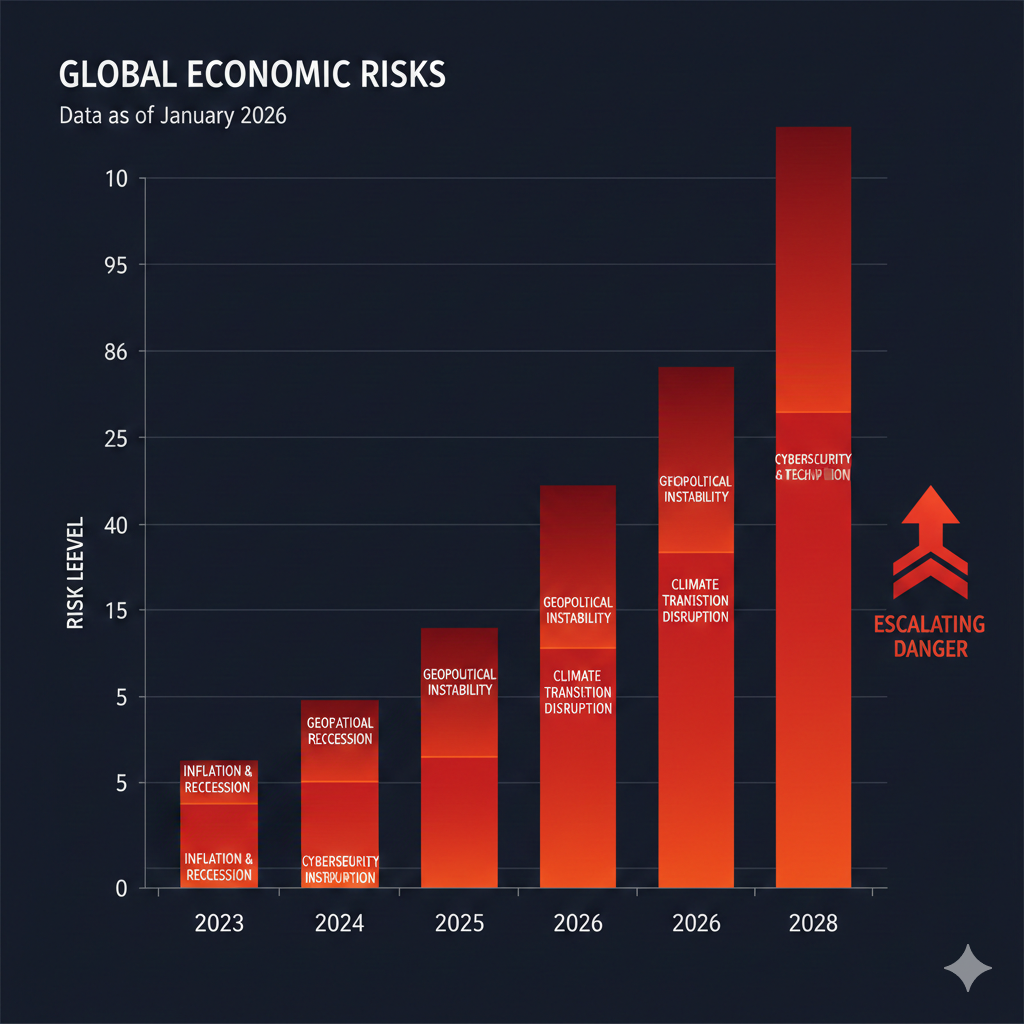
It’s not all sunshine, of course. For 2026, we’ve identified some pretty serious hurdles. Geoeconomic confrontation, for example, is our top global risk. We’re talking about major powers sparring and international institutions struggling to keep up. Doesn’t that just chip away at global stability and trust? We think so.
Armed conflicts between nations are also a huge worry. They’re ranked as the second-highest risk, and frankly, they just pour more uncertainty onto everything else. Fiscal health is another concern; many countries are grappling with high debt costs and the possibility of wild swings in commodity prices. And then there’s the weather. Extreme events are getting more frequent, more intense. They’re contributing to things like food inflation and population displacement, and they’re wreaking havoc on infrastructure. It’s a mess, truly.
Emerging Opportunities: A Positive Global Economic Outlook 2026 Perspective
But it’s not all doom and gloom. Even with all those challenges, 2026 offers some compelling avenues for real growth and ingenuity. Technology, particularly AI and robotics, is absolutely set to drive economic expansion. I mean, global investment in AI is projected to hit $500 billion – that’s huge! It’s going to boost productivity across almost every industry, we believe.
The green energy transition? It remains central to the entire global economy. We’re seeing accelerated investments in solar, wind, and green hydrogen. And what about specific sectors? Retail, financial services, and insurance all look set for stronger performance. Health, biotechnology, digital health, and advanced manufacturing are also looking incredibly promising, benefiting from fresh ideas and rising demand. We’re even seeing investment flows shifting due to things like nearshoring policies, which should stimulate manufacturing and construction in a few economies.
My Final Thoughts
So, where do we stand with the Global Economic Outlook 2026? It’s undeniably complex. We’ve got resilience in some areas, but also a pretty fragmented world out there. While geopolitical strains and climate woes are significant hurdles, I really do think technological innovation and smart investments offer clear paths to continued growth. To navigate this effectively, we’re going to need flexible policies and genuine cooperation. It’s how we’ll seize the opportunities and deal with those persistent challenges, ultimately shaping what could be a far more abundant future.