


Gold prices experienced a notable pullback during Wednesday’s trading session, retreating from recent highs as the latest U.S. inflation data injected new volatility into global markets. The fundamental catalyst driving the sudden downward pressure was the release of the U.S. Producer Price Index (PPI), which came in hotter than expected, forcing market participants to recalibrate their expectations regarding Federal Reserve monetary policy.
Spot gold (XAU/USD) dipped approximately 1.2% in the immediate aftermath of the data release, trading near the $2,310 per ounce mark, a significant intraday slip after flirting with psychological resistance levels earlier.
The Trigger: Surprising PPI Data
The U.S. Bureau of Labor Statistics reported that the Producer Price Index—a measure of the average change over time in the selling prices received by domestic producers for their output—rose by 0.5% in April on a monthly basis. This figure exceeded analysts’ consensus forecast, which had predicted a more modest 0.3% increase. Furthermore, core PPI, which strips out volatile food and energy costs, also surprised to the upside.

While PPI measures inflation at the producer level, it is viewed as a leading indicator of consumer inflation, as manufacturers and retailers often pass these higher costs on to end-users. A “hot” PPI reading signals that persistent inflationary pressures remain entrenched within the supply chain, complicating the Federal Reserve’s narrative that inflation is sustainably trending downward.
The Connection to Interest Rates
The primary reason gold, non-yielding by nature, reacts poorly to hot inflation data is the subsequent effect on interest rate expectations. Prior to the release, futures markets were increasingly pricing in potential rate cuts starting in the fourth quarter of 2024.
However, a stronger-than-expected PPI print suggests the U.S. economy might still be running too hot for the Fed to comfortably shift toward monetary easing. When inflation remains sticky, the central bank must keep interest rates “higher for longer” to cool demand.
Elevated interest rates are typically detrimental to gold for two main reasons:
-
Increased Opportunity Cost: Gold provides no yield (no dividend or interest). When yields on alternative assets, such as U.S. Treasury bonds, remain high or increase, investors often prefer the guaranteed return offered by bonds, making gold less attractive.
-
Dollar Strength: Higher interest rates generally support a stronger U.S. Dollar by attracting foreign capital looking for better returns. Since gold is globally traded in USD, a stronger greenback makes the metal more expensive for international buyers, reducing demand.
Immediately following the PPI news, the 10-year U.S. Treasury yield and the U.S. Dollar Index (DXY) both saw sharp upticks, directly pressuring the gold price curve downward.
Technical Outlook and Market Sentiment
Despite this immediate slip, analysts note that the broader structural uptrend for gold remains intact, driven by ongoing geopolitical tensions in the Middle East and Eastern Europe, as well as persistent central bank buying. The current pullback is viewed by some technical traders as a necessary correction within a bull market.
The key technical levels for XAU/USD to watch now are support around the $2,280–$2,300 zone, and immediate resistance near the $2,350 level, where the price met selling pressure earlier.
Awaiting Core CPI
While the PPI data caused an immediate reaction, the market’s focus now shifts entirely to the imminent release of the U.S. Consumer Price Index (CPI). The CPI data is considered even more critical by the Federal Reserve and will likely provide definitive guidance for the September policy decision. If CPI follows the PPI’s lead and prints hotter than expected, further losses in gold may be likely. Conversely, a soft CPI reading could quickly reverse today’s losses and send gold surging back toward recent record highs.
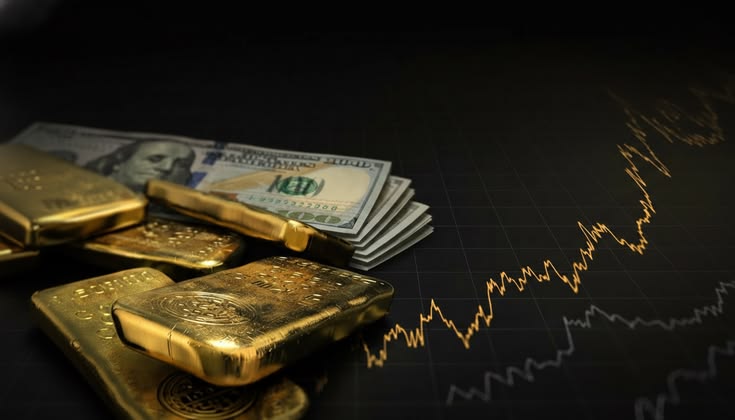
As the chart in the visual demonstrates, market sentiment remains reactive to data, with high-frequency noise dictating short-term price action until a clearer picture of the Fed’s trajectory emerges.
Conclusion
In summary, the unexpected rise in U.S. Producer Price Index (PPI) data has triggered short-term turbulence in the precious metals market by reinforcing expectations of prolonged high interest rates from the Federal Reserve. Non-yielding assets like gold face immediate downside pressure whenever sticky inflation fuels bond yield spikes and strengthens the U.S. Dollar.
However, despite these near-term headwinds, gold’s underlying multi-month bullish framework remains supported by persistent geopolitical uncertainties and strong central bank accumulation. Moving forward, the upcoming U.S. Consumer Price Index (CPI) release will act as the ultimate judge—determining whether this price decline is merely a temporary buying opportunity or the start of a broader consolidation phase for XAU/USD.

