

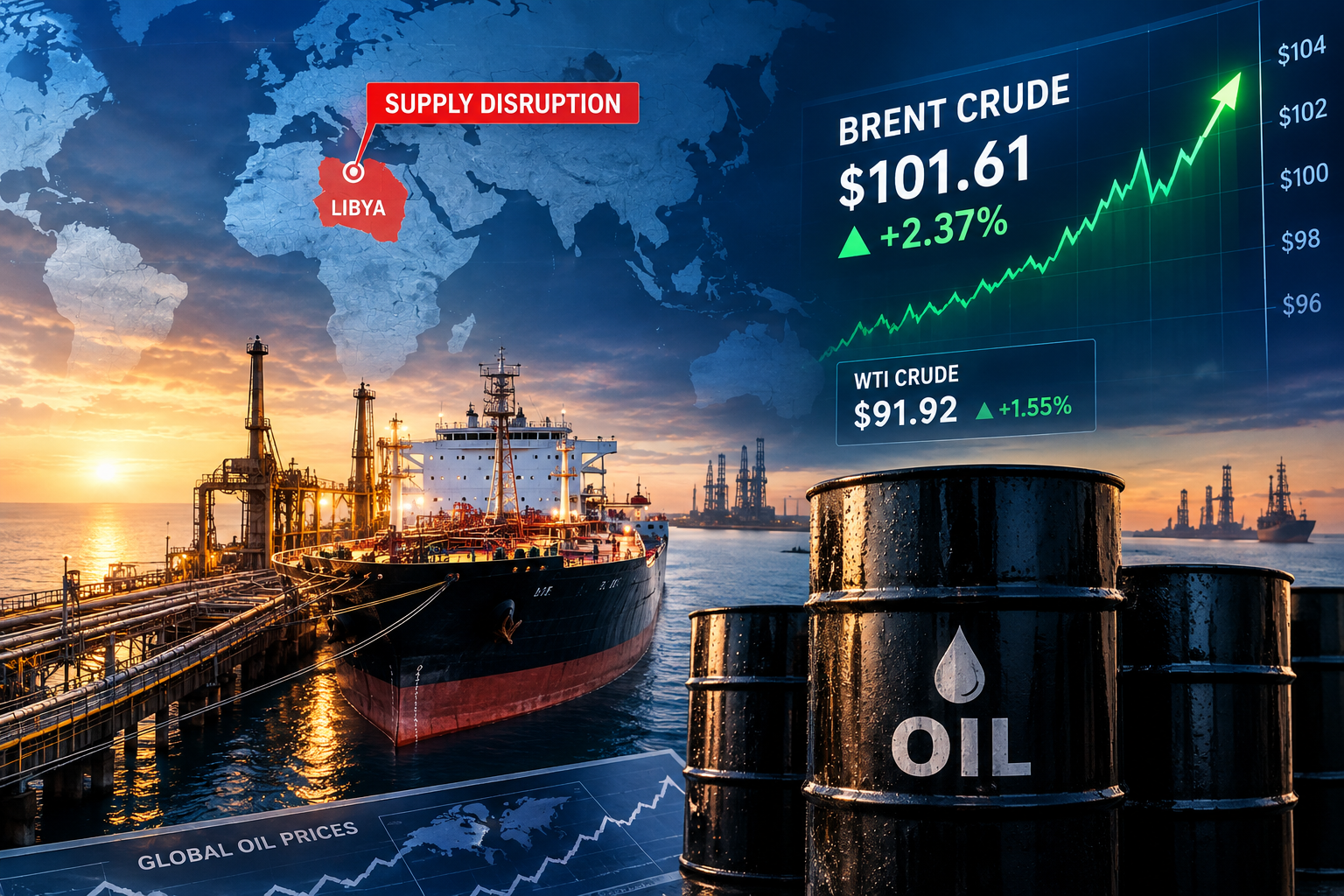
Global oil prices moved higher on September 24 as Brent crude reclaimed the $100 per barrel level following a new disruption to Libyan oil production. Brent crude rose to around $101.61 per barrel, while U.S. West Texas Intermediate (WTI) traded near $91.92. The rebound came after oil prices had suffered several consecutive sessions of losses.
The latest move highlights how sensitive the oil market remains to supply disruptions. Although improving supply prospects in Saudi Arabia and hopes for progress in U.S.-Iran negotiations had recently pushed prices lower, the shutdown of a key Libyan pipeline quickly renewed concerns about the availability of crude.
Brent Oil Reclaims $100
Brent crude climbed about 2.37% to $101.61 in recent trading, breaking a five-session losing streak. WTI also recovered, gaining around 1.55% to $91.92 after falling as low as $89.64 earlier in the session.
The recovery shows how quickly sentiment can change in the current oil market. Just one day earlier, Brent had fallen below $100 as traders expected higher Saudi exports and watched diplomatic discussions involving the United States and Iran. The latest Libyan disruption shifted attention back toward supply risks.
Libya Supply Disruption Raises Concerns
The immediate catalyst was a disruption at Libya’s El Sharara oilfield. Libya’s National Oil Corporation reported that an armed group had shut a valve on the pipeline carrying crude from the field toward the Zawiya port, sharply reducing production. El Sharara is one of Libya’s largest oilfields and accounts for a significant share of the country’s output.
The disruption is particularly important because it comes while global oil inventories are under pressure. A sudden loss of Libyan barrels adds another supply challenge to a market already dealing with disruptions across parts of the Middle East, increasing sensitivity to any further interruptions.
Middle East Supply Risks Remain Important
Oil traders are also monitoring developments surrounding Middle Eastern supply routes. Earlier this week, expectations that Saudi Arabia could restore crude shipments through its East-West pipeline helped ease supply concerns and pushed Brent below $100. Saudi Arabia has been using alternative routes to move crude toward the Red Sea after disruptions affected Gulf exports.
At the same time, diplomatic developments involving the United States and Iran have influenced oil prices. Hopes for negotiations have encouraged traders to price in the possibility of improved supply conditions, although uncertainty remains. This has created significant day-to-day volatility in Brent and WTI prices.
U.S. Oil Inventories Add Another Variable
U.S. inventory data is also influencing the outlook for crude prices. Industry data indicated that U.S. crude inventories increased by around 1.8 million barrels in the week ending September 18, contrary to expectations for a decline. Official Energy Information Administration data is being closely watched by the market for confirmation and additional details.
Higher inventories can normally reduce concerns about near-term supply shortages, potentially limiting price gains. However, the effect can be offset when unexpected production disruptions occur elsewhere, as demonstrated by the latest move in Brent following the Libyan pipeline shutdown.
Why Is Oil Still Trading Above $100?
The return of Brent above $100 reflects the market’s continuing sensitivity to geopolitical and supply-side risks. Even though some Middle Eastern supply routes are gradually recovering, the possibility of further disruptions remains an important factor in determining the risk premium embedded in crude prices.
The recent price action also demonstrates the difference between temporary supply relief and a complete normalization of global oil flows. Saudi pipeline operations and potential diplomatic progress can reduce prices, but new disruptions in Libya or elsewhere can quickly reverse that trend.
Could Oil Prices Rise Further?
The direction of oil prices will depend heavily on whether supply disruptions expand or begin to ease. Continued outages in Libya, uncertainty around Middle Eastern shipping routes, or further damage to energy infrastructure could maintain upward pressure on crude prices.
On the other hand, a sustained improvement in Gulf exports, stronger diplomatic progress between the United States and Iran, and rising inventories could reduce some of the supply premium in oil prices. Analysts and traders are therefore watching both geopolitical developments and physical crude flows rather than relying on a single market indicator.
What Should Traders Watch Next?
Brent’s ability to remain above $100 is likely to be an important short-term market reference. Traders will also monitor the status of Libya’s El Sharara operations, Saudi export flows, developments around the Strait of Hormuz and further U.S.-Iran diplomatic discussions.
U.S. crude inventory figures, the U.S. dollar and global economic data will also influence the market. If supply concerns dominate, oil could remain volatile, while clearer signs of improving supply could put renewed pressure on prices.

Global Oil Price Outlook
The global oil market remains caught between two competing forces: expectations of improving supply and continuing disruption risks. Brent’s move back above $100 following the Libyan outage shows that traders remain highly responsive to unexpected changes in production and transportation.
For now, Brent around the $100 level and WTI near $92 provide important reference points for the market. Future price movements will depend on whether Libya restores production, Middle Eastern supply continues to recover, and diplomatic developments reduce or increase the risk of further disruptions.
Conclusion
Global oil prices have returned to the spotlight after Brent reclaimed $100 following a disruption at Libya’s El Sharara oilfield. The move reversed some of the recent declines caused by expectations of improved Saudi supply and potential U.S.-Iran diplomatic progress.
The latest rebound demonstrates that the global oil market remains highly sensitive to supply disruptions. As traders monitor Libya, Saudi Arabia, the Strait of Hormuz and U.S.-Iran relations, Brent could remain volatile around the $100 level. The next major direction will depend on whether global crude supplies continue to recover or whether additional disruptions emerge.

